
When you begin researching high-performance floor coatings, it is easy to become overwhelmed by the technical jargon and the competing claims of different manufacturers. As experts in the field at Palmetto Epoxy, we believe that an educated customer is our best partner, and understanding the distinct chemical properties of epoxy, polyaspartic, and urethane is the first step toward a successful project. Each of these materials has a specific role to play in a professional flooring system, and the “best” choice depends entirely on your specific environment, budget, and performance requirements. In the humid, coastal climates of Bluffton and Hilton Head, the choice becomes even more critical, as factors like moisture vapor transmission and UV exposure can drastically affect the lifespan of your investment. This post will break down the strengths and weaknesses of each material to help you decide which one will provide the most value for your unique space.
The Workhorse: Understanding Epoxy Coatings
Epoxy has long been the gold standard for industrial and residential floor coatings because of its incredible bonding strength and “high-build” capabilities. Chemically, epoxy is a two-component system consisting of a resin and a hardener that, when mixed, create a rigid plastic cross-link that is exceptionally hard and impact-resistant. One of its greatest advantages is its “wettability,” which allows it to penetrate deep into the pores of a properly prepared concrete slab to create a permanent mechanical bond. According to industry technical guides, epoxy is ideal for leveling out minor imperfections in concrete because it can be applied in thicker layers than polyaspartic or urethane. This makes it an excellent base coat for most residential garage systems, providing the structural backbone needed to withstand heavy vehicles and toolboxes.
However, standard epoxy does have notable limitations that homeowners in South Carolina must consider, specifically regarding UV stability and flexibility. Traditional epoxies are “aromatic,” meaning they will inevitably yellow or “chalk” when exposed to direct sunlight over time, which is a significant concern for garages with large windows or for outdoor patios. Furthermore, epoxy is a relatively brittle material; while it is very hard, it does not expand and contract as well as the concrete beneath it during the dramatic temperature swings we experience in the Lowcountry. If the concrete develops a hairline crack due to settling, a rigid epoxy coating is likely to crack along with it. Despite these drawbacks, when used as a primer or base coat in a multi-layer system, epoxy remains an unbeatable value for its sheer adhesion and durability.
The High-Performance Contender: Polyaspartic Systems
Polyaspartic coatings represent the next generation of floor protection, originally developed to protect steel bridges from the corrosive effects of salt and water. A polyaspartic is actually a type of aliphatic polyurea, which means it is inherently UV-stable and will never yellow, regardless of how much sun it receives. This makes it the premier choice for outdoor pool decks and garage aprons that are frequently exposed to the elements. One of the most touted benefits of polyaspartic is its rapid cure time; while an epoxy floor might require three to five days before you can park a car on it, a polyaspartic system can often be returned to full service in as little as 24 hours. Research from Garage Living notes that polyaspartic is approximately four times more durable and significantly more flexible than traditional epoxy, allowing it to bridge small cracks without peeling.
In the humid Bluffton climate, polyaspartic’s moisture tolerance is a game-changer for many homeowners. Because it is more flexible than epoxy, it handles the natural expansion and contraction of concrete much better, which prevents the delamination (peeling) often seen in lower-quality DIY kits. However, this high performance comes with a higher price tag and requires a much higher level of skill to install. Polyaspartic has a very short “pot life,” meaning the installers only have about 15 to 20 minutes to apply the material before it begins to harden in the bucket. This is why you rarely see polyaspartic sold in big-box stores; it is a professional-grade material that requires a coordinated team and specialized equipment to apply correctly. When you choose a polyaspartic topcoat, you are investing in a “forever floor” that maintains its gloss and protection for decades.
The Specialist: The Role of Urethane Topcoats
Urethane (specifically polyurethane) is rarely used as a standalone coating on concrete because it does not bond to the raw substrate nearly as well as epoxy or polyaspartic. Instead, it is almost exclusively used as a high-performance topcoat to provide a specific finish and added chemical resistance. Urethanes are known for having excellent “scratch-resistance” and are often used in commercial settings like auto shops where floors are subjected to constant sliding of heavy equipment. A thin layer of urethane over an epoxy base can provide a satin or matte finish that hides surface scratches better than a high-gloss epoxy. According to Blackrock Industrial, urethanes are also highly resistant to chemicals like brake fluid and battery acid, which can sometimes soften standard epoxy.
For a residential homeowner, a urethane topcoat might be the right choice if you are looking for a very specific aesthetic or if you use your garage as a heavy-duty workshop. It is important to note, however, that most modern “one-day” residential systems have replaced traditional urethanes with polyaspartics because polyaspartics offer similar chemical resistance with much faster dry times and better thickness. Urethanes are typically moisture-sensitive during the application process, meaning a sudden afternoon rainstorm in Hilton Head could ruin a fresh installation if the humidity spikes too high. At Palmetto Epoxy, we typically reserve traditional urethanes for specific commercial applications where a matte finish is required. For the average garage, a polyaspartic topcoat provides superior protection and a much faster return to service.
Conclusion: Finding Your Perfect Floor
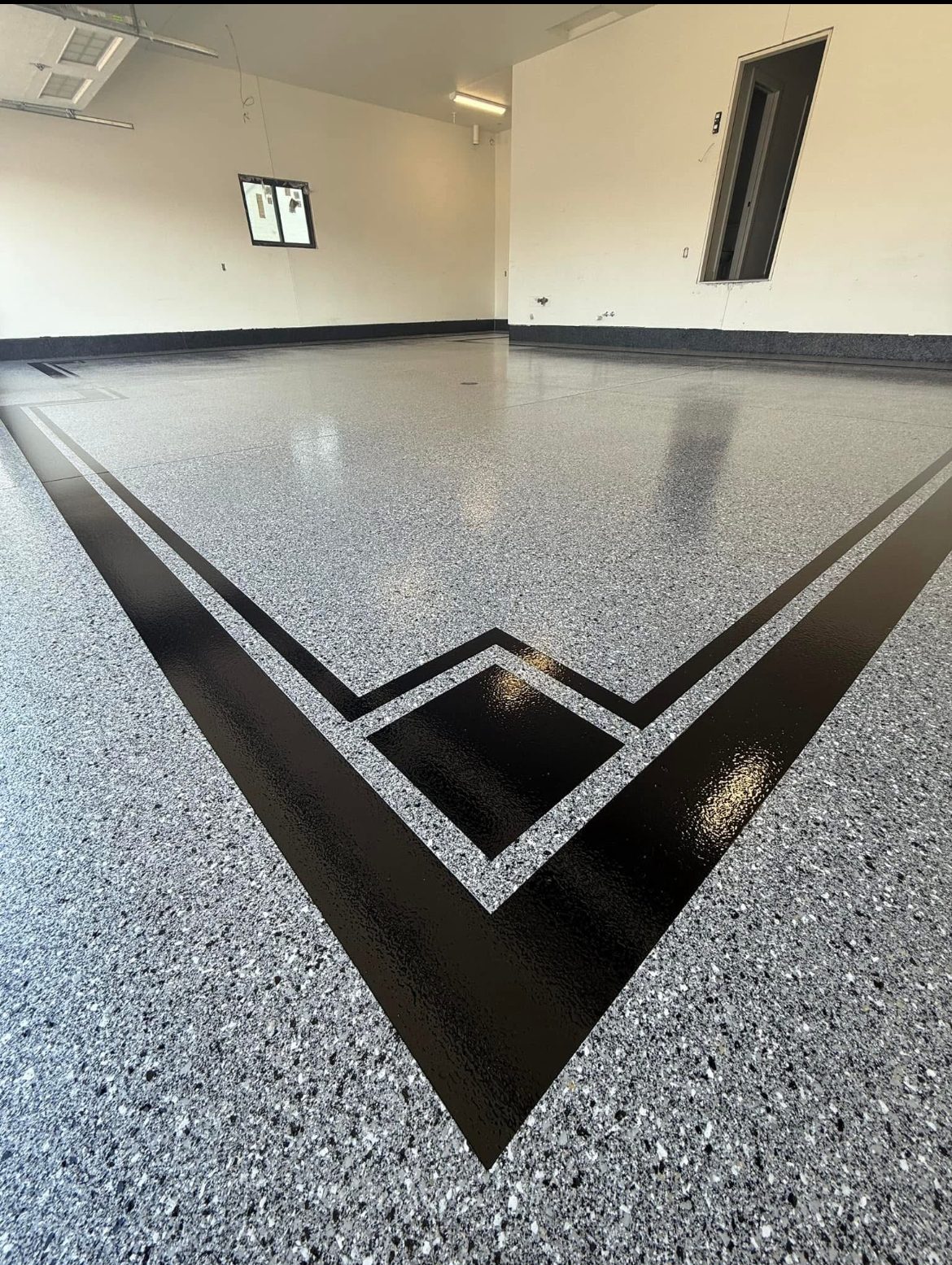
Selecting the right flooring system isn’t about finding the “best” chemical, but about engineering the right combination of layers for your specific needs. For most homeowners in the Bluffton and Hilton Head area, the ideal solution is a hybrid system: an epoxy base coat for maximum adhesion to the concrete, followed by a full broadcast of decorative flakes, and finished with a polyaspartic topcoat for UV protection and scratch resistance. This “best of both worlds” approach ensures that your floor is stuck down for good, won’t yellow in the sun, and can be back in use by the very next day. By avoiding the pitfalls of low-quality DIY kits and choosing professional-grade materials, you are ensuring that your garage becomes a valuable, functional extension of your home rather than a maintenance headache.
At Palmetto Epoxy, we take the time to evaluate your concrete’s moisture levels and intended use before recommending a system. We believe in transparency and quality, ensuring that every layer we apply is designed to withstand the unique challenges of Lowcountry living. Whether you need the industrial strength of epoxy or the rapid-return and UV stability of polyaspartic, we have the expertise to deliver a flawless finish. Your floor is an investment in your property’s value and your own peace of mind—make sure it’s done right the first time with the right materials.
Ready for a floor that lasts a lifetime?
Sign up for a Free Estimate and let our experts design the perfect epoxy or polyaspartic system for your space!
Leave a Reply